POWER PLANTS Phyto-Garden Competition 2017
Architecture students from the University of Newcastle and landscape architecture students from the University of Technology, Sydney engaged with a two week intensive design studio to produce schemes for a small tract of land on the White Bay Power Station site. This site is a digital exhibition to showcase the ideas and concepts these students have produced in order to engage with remediation of the toxic site, it's context and it's place in the area's future development.
Competition Brief
Design teams were asked to explore a garden design typology, select planting materials and design a planting plan which suited their design aspirations that also remediated the soil. One of the key challenges that each team faced was the fact that there is limited access to the site, so the experience of the garden will be either through a led tour or through a webcam, etc. Additionally, signage to explain the garden and its parts will not be utilised so another challenge was conveying information about the proposed garden and its functions without signage.
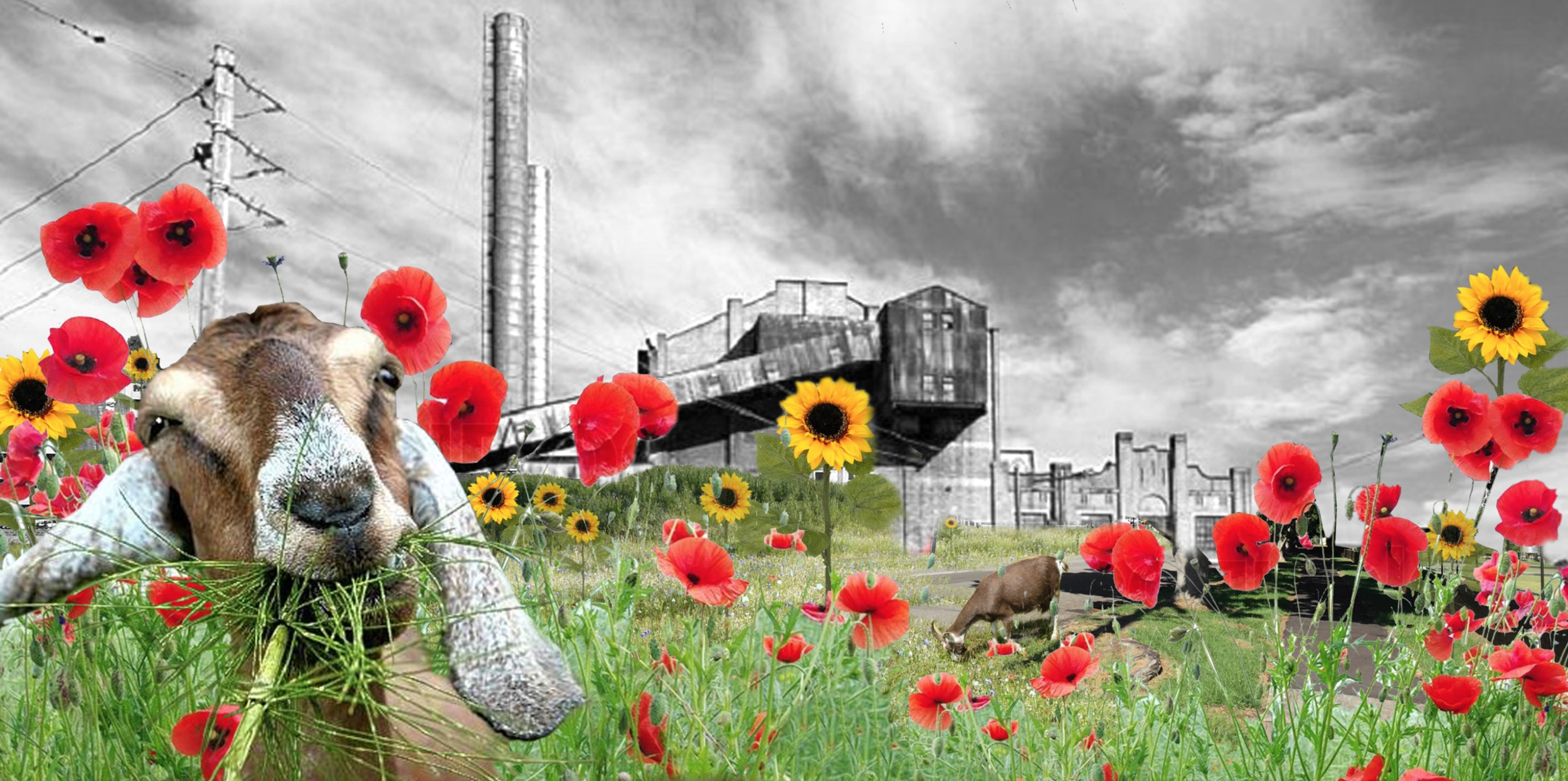
This garden is a setting for ecological and other event based performative processes. It will be planted, harvested, and replanted as well as eventually grazed. These garden milestones will be marked by celebratory events. Each team had to consider opportunities to make the most of these events and how to capture them for dissemination beyond the actual event itself. The site itself has a number of heritage considerations as well as cultural layers. The garden design needed to creatively engage with these opportunities. As with all sites, the project site is part of a larger precinct as well as an open space, urban design approach. Each team had to consider both immediate adjacent site contexts, the future uses of the sites, as well as larger urban networks and systems which their design propositions could tap into.
What is phytoremediation?
Phytoremediation is a low cost, plant (vegetative) and solar energy driven, soil remediation technique. Initial establishment of a series of phytoremediation gardens will remove a percentage of toxins from contaminated soils, sludges, sediments, surface water and ground water through the selected plants absorbing and metabolising various pollutants into their tissues. After the initial harvesting of three successive gardens in stages, introducing hardy and resilient goat communities to hazardous sites can further breakdown harmful contaminations through the consumption of plants and breaking down PH imbalances through bio agents found within their bodies.